Monday, 7 March 2011

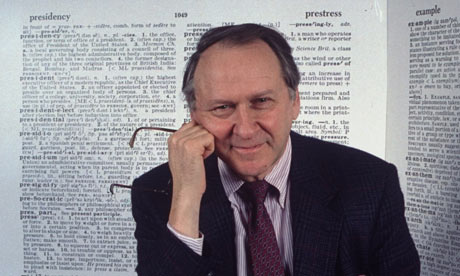
Margaret Atwood, The Queen of Surreal Meaningfulness


Margaret Atwood was interviewed by the BBC, on Friday. She believes Digital books are one way to read. She was confident about the longevity of paper books.
Margaret Atwood's illustrations of the writer's food chain :D

She has blogged about it too:

Three Reasons to Keep Paper Books

Here come the e-readers, a boon to travelers and speed readers, and, we’re told, a saver of trees. And, in their wake, here come the prophets predicting doom to the paper book, and along with it the death of copyright and all sorts of unknown effects.
But not so fast. Don’t burn the books yet. I’m not pleading the venerable history, the beauty of design, or the tactility of the page. Here are three practical reasons not to ditch the paper:
1.Solar storms. A big one could fry transformers, as solar storms have in the past, and affect satellites and towers in such a massive way that communications could be down for months, with much disruption of all sorts. Including, possibly, the wipeout of all online libraries and downloads.  Don’t let anyone embed a chip into your head, either, no matter how much memory they promise to add!
2.Energy shortages. Remember Peak Oil? We know that green energy is galloping to the rescue, but is nowhere near meeting the need. We know that internet servers are themselves gobbling up huge amounts of energy. Will server relocation on Iceland meet future needs? Guess we’ll see… If not, down goes the Net.  Not to mention your ability to re-charge the batteries of your e-reader.
3.Overloaded internet. The thing is stuffed to capacity already, with more information piling into it every day. Unless billions are spent on infrastructure, brownouts—we’re told – are very likely. And then, how now, brown cash cow?
If you’ve saved up some paper books, you can read them by candlelight, and then toast marshmallows on them if you don’t like them. As you huddle around the embers of your carefully-guarded fire, with no television, no computer, and no phone, you’ll be glad you kept a few. Anyway, they make good insulation.

Just like in her blogpost, in The Guardian's article, Ten Rules for Writing Fiction (part one),  Margaret Atwood showed things from the human perspective before she moved on to skills and finally to humour. These ten rules are a trip through an Atwood novel : to quote the New York Times: her comic distortion veers at times into surreal meaningfulness. ;)
Margaret Atwood 
1 Take a pencil to write with on aeroplanes. Pens leak. But if the pencil breaks, you can't sharpen it on the plane, because you can't take knives with you. Therefore: take two pencils.
2 If both pencils break, you can do a rough sharpening job with a nail file of the metal or glass type.
3 Take something to write on. Paper is good. In a pinch, pieces of wood or your arm will do.
4 If you're using a computer, always safeguard new text with a ­memory stick.
5 Do back exercises. Pain is distracting.
6 Hold the reader's attention. (This is likely to work better if you can hold your own.) But you don't know who the reader is, so it's like shooting fish with a slingshot in the dark. What ­fascinates A will bore the pants off B.
7 You most likely need a thesaurus, a rudimentary grammar book, and a grip on reality. This latter means: there's no free lunch. Writing is work. It's also gambling. You don't get a pension plan. Other people can help you a bit, but ­essentially you're on your own. ­Nobody is making you do this: you chose it, so don't whine.
8 You can never read your own book with the innocent anticipation that comes with that first delicious page of a new book, because you wrote the thing. You've been backstage. You've seen how the rabbits were smuggled into the hat. Therefore ask a reading friend or two to look at it before you give it to anyone in the publishing business. This friend should not be someone with whom you have a ­romantic relationship, unless you want to break up.
9 Don't sit down in the middle of the woods. If you're lost in the plot or blocked, retrace your steps to where you went wrong. Then take the other road. And/or change the person. Change the tense. Change the opening page.
10 Prayer might work. Or reading ­something else. Or a constant visual­isation of the holy grail that is the finished, published version of your resplendent book.
I existed on a diet of male authors (tasty ;)) once I left school; I think I thought anything meaningful was written by men: Margaret Atwood blasted that theory out of the water.
Margaret Atwood's The Blind Assassin is one of the 25 books selected to be handed out for free for World Book Night - and one of the few books, written by her, that I haven't read. :(    Soon.

Writing advice #5 is my favourite: practical wisdom ;) -  5 Do back exercises. Pain is distracting. 

Sunday, 6 March 2011

SEVEN ON SUNDAY - STARRING MG

Sunday is the day I read: Neil Gaiman's The Graveyard Book. I've read up to page 101. Neil is an amazing writer: he makes the extraordinary sound ordinary.

Then I took new profile photos - not a joy!

Finally, I learned about video recording and the other side of Youtube - more details will, I'm sure, follow later. :s

These are my seven sentences for Sunday. They are taken from STARRING - MG magical realism novel:

“Of course, it’s not safe,” said Rowland. 
“As long as we know,” said Lucas. He wobbled when he shifted from crouching to sitting.
“Can you see the tin can?”
“No, but the lance and sword are down there, pointing up.”
Rowland grinned as he shrugged, “Better not jump, then.” 
Sighing, Lucas forced the warm air to move when he swung his feet, “Not tonight.”

Saturday, 5 March 2011

WRITING RULES! CHECK WILLIAM SAFIRE AND WRITERSHERRY's 54

WILLIAM SAFIRE
Can't you tell you'd have listened to every word he said?

THE ANTI-RULES OF WRITING ;)

Did you see this post on Sherry's Dark Angel Fiction, Writing and Reviews Blog? I loved it! I've also got a date with a climbing wall and a things-are-getting-desperate end of season match to attend at Vicarage Road, home of WFC: - "Come on you Horns!" I'll be holding my breath at the first, but I  think it's the end of the road for Watford's promotion hopes. There is always next year ;)

Sherry posted:

The first 36 rules below are qouted by William Safire compiled from his October 7 and November 4, 1979 "On Language" columns in The New York Times. Rules 37 to 54 are taken from Safire's book, "Fumblerules: A Lighthearted Guide to Grammar and Good Usage."  

YOU LEARN BEST BY READING WORK THAT IS WELL-WRITTEN BUT SEEING IT DONE WRONG  (like Damn You, Autocorrect: ) CAN BE A LEARNING EXPERIENCE, AND VERY FUNNY, TOO:

1.               Remember to never split an infinitive.
2.               A preposition is something never to end a sentence "with".
3.               The passive voice should never be used.
4.               Avoid run-on sentences they are hard to read.
5.               Don't use no double negatives.
6.               Use the semicolon properly, always use it where it is appropriate; and never where it isn't.
7.               Reserve the apostrophe for it's proper use and omit it when its not needed.
8.               Do not put statements in the negative form.
9.               Verbs have to agree with their subjects.
10.            No sentence fragments. (Trouble, again!)
11.            Proofread carefully to see if you words out.
12.            Avoid commas, that are not necessary.
13.            If you reread your work, you can find on rereading a great deal of repetition can be avoided by rereading and editing.
14.            A writer must not shift your point of view.
15.            Eschew dialect, irregardless.
16.            And don't start a sentence with a conjunction.
17.            Don't overuse exclamation marks!!!
18.            Place pronouns as close as possible, especially in long sentences, as of 10 or more words, to their antecedents.
19.            Hyphenate between sy-  llables and avoid un-necessary hyphens.
20.            Write all adverbial forms correct.
21.            Don't use contractions in formal writing.
22.            Writing carefully, dangling participles must be avoided. 
23.            It is incumbent on us to avoid archaisms.
24.            If any word is improper at the end of a sentence, a linking verb is.
25.            Steer clear of incorrect forms of verbs that have snuck in the language.
26.            Take the bull by the hand and avoid mixing metaphors. (:D)
27.            Avoid trendy locutions that sound flaky.
28.            Never, ever use repetitive redundancies.
29.            Everyone should be careful to use a singular pronoun with singular nouns in their writing.
30.            If I've told you once, I've told you a thousand times, resist hyperbole.  
31.            Also, avoid awkward or affected alliteration.
32.            Don't string too many prepositional phrases together unless you are walking through the valley of the shadow of death.
33.            Always pick on the correct idiom.
34.            "Avoid overuse of 'quotation "marks."'"
35.            The adverb always follows the verb.
36.            Last but not least, avoid clichés like the plague; they’re old hat; seek viable alternatives.
37.            Never use a long word when a diminutive one will do.
38.            Employ the vernacular.
39.            Eschew ampersands & abbreviations, etc.
40.            Parenthetical remarks (however relevant) are unnecessary. 
41.            Contractions aren't necessary.
42.            Foreign words and phrases are not apropos.
43.            One should never generalize.
44.            Eliminate quotations. As Ralph Waldo Emerson said, "I hate quotations. Tell me what you know."
45.            Comparisons are as bad as clichés.
46.            Don't be redundant; don't use more words than necessary; it's highly superfluous.
47.            Be more or less specific.
48.            Understatement is always best.
49.            One-word sentences? Eliminate. (Umm . *blushes)
50.            Analogies in writing are like feathers on a snake.
51.            Go around the barn at high noon to avoid colloquialisms.
52.            Who needs rhetorical questions?
53.            Exaggeration is a billion times worse than understatement.
54.            capitalize every sentence and remember always end it with a point/full stop

These rules are clever. Funny. Why then, from the moment I read them, could I see there would be a few I'd knowingly break? Not for no reason is writing called creative. 
Which rule are you going to break the moment you open up your wip?

Friday, 4 March 2011

WORLD BOOK NIGHT - THE SPY WHO CAME IN FROM THE COLD: review

During the 1950s and the 1960s, there was a man working for MI5 and MI6, he lived with the human cost of what it meant to be a spy. Unsurprisingly, considering the official secrets act which undoubtedly he’d signed, when D**** J M C******* began writing novels about spies he did so using a pseudonym. 

I imagine he had less difficulty maintaining multiple lives, if not multiple personalities.

 "John le Carré" wrote The Spy who Came in from the Cold. This is one of the 25 great novels being handed out free for World Book Night. Tonight, he will sidle into Trafalgar Square and read an excerpt although, perhaps, no one will see him arrive and his exit will be made when the eyes of the media are turned elsewhere ;)

This is one of the three novels selected to represent the best of “modern,” accessible and great literature that I have read. My shame is vast and heavy. I have purchased Seamus Heaney - Selected Poems, Mohsin Hamid - The Reluctant Fundamentalist, Gabriel García Márquez - Love in the Time of Cholera and Yann Martel - Life of Pi. They are piled up on the bedside table, ready to make sure I never get any sleep (after I read the last 20 pages of Linger – Maggie Stiefvater then Neil Gaiman’s - The Graveyard Book and Anthony Horowitz – Necropolis which the library caffeinated me with this week;) However, enough of my addiction.

The Spy who Came in from the Cold is the story of Alec Leamas, an aging British spy. It is set in the grimm-grey, seedy parts of London, Berlin and East Germany (the old GDR) in the early 1960s.  For a book that is best described as lean it contains a complex plot that hints and teases with flashes of clues and drags the reader into the human side of the spy game at heart-pumping pace.

It is the affects of spying on the man, Leamas, and the difficulties of the life style that holds the heart of the work: finding the black and white while submersed in the grey and amoral nature of the game he is playing: fighting in The Cold War. Alec - is not open to the reader not even to himself - Leamas is cagy and secretive. He must shroud reality and be what he has to be. His world is chilling.

Happy World Book Night - a million reasons to read a book.

WHAT BOOK ARE YOU READING, AT THE MOMENT?

Thursday, 3 March 2011

12 WAYS TO IMPROVE YOUR WRITING

Subliminal ;)

Ways to improve your writing – these are the ones I’m working on ;)

  1. Use the active voice - I wrote a book, not, the book was written by me.
  2. Check with the grammar sites – that way, you’ll know exactly which rules you’re breaking.
  3. The big words can stay if they're necessary – but evaluate every one of them. If a small word can convey the sense, let it.
  4. Think about the reader: write for them but not down to them.
  5. Keep your paragraphs short.
  6. Use imagery to build emotional impact.
  7. Use adverbs sparingly - like chilli, enough to add flavour but not so much it destroys the meal.
  8. Join a local writing group or find some awesome readers for whom distance is no obstacle J
  9. Avoid writing slang, it changed yesterday, already!
  10. And edit

Sshh! 

How has your writing day been?

Mine was pretty good :D


Wednesday, 2 March 2011

WORDS HAVE POWER - THIS IS ON THE WRONG SIDE OF THE LINE

I like you just the way you are, drunk and dancing at the bar, I can't wait to take you home so I can do some damage
I like you just the way you are, drunk and dancing at the bar, I can't wait to take you home so I can take advantage.

Brian McFadden has a team working with him to help him make all important decisions. I keep trying to imagine the decision making process that lead to him releasing this track. I'd put the video for it here but I don't want to inflict it on you.


Brian McFadden continues to defend his new single against allegations it glorifies date rape - and has even said he will give all the profit from the song to a charity which supports victims of rape. I bet the victims of rape are relieved - that will put them totally at ease.


Words have power. Brian McFadden is too influential to wield them carelessly.


I'M FEELING ONE DEGREE AWAY FROM IRATE; DO YOU THINK I'M OVER-REACTING?

Tuesday, 1 March 2011

A COUNT DOWN TO WORLD BOOK NIGHT


 World Book Night is getting closer.
Chairman of the event, Jamie Byng, chief of publisher Canongate hopes the event will have "an enormously positive impact on books and reading."
 "Having a million books given to one million different people on one night in this way is both unprecedented and hugely exciting," he said. 
He is right!
The event starts in Trafalgar Square, this Friday night. Margaret Atwood, John le Carré and other major writers will be reading from their books to mark the official start to this amazing concept.
Comprehensive lists of books were forwarded to a panel. The merits of many well-known and well-loved books were debated. The titles they selected will be handed out for free. This is the list they chose:  
  • Kate Atkinson - Case Histories 
  • Margaret Atwood - The Blind Assassin 
  • Alan Bennett - A Life Like Other People's 
  • John le Carré - The Spy Who Came in From the Cold
  • Lee Child - Killing Floor 
  • Carol Ann Duffy - The World's Wife 
  • Mark Haddon - The Curious Incident of the Dog in the Night-Time 
  • Seamus Heaney - Selected Poems 
  • Marian Keyes - Rachel's Holiday 
  • Mohsin Hamid - The Reluctant Fundamentalist 
  • Ben Macintyre - Agent Zigzag 
  • Gabriel García Márquez - Love in the Time of Cholera 
  • Yann Martel - Life of Pi 
  • Alexander Masters - Stuart: A Life Backwards 
  • Rohinton Mistry - A Fine Balance 
  • David Mitchell - Cloud Atlas 
  • Toni Morrison - Beloved 
  • Chimamanda Ngozi Adichie - Half of a Yellow Sun 
  • David Nicholls - One Day 
  • Philip Pullman - Northern Lights
  • Erich Maria Remarque - All Quiet on the Western Front
  • CJ Sansom - Dissolution 
  • Nigel Slater - Toast 
  • Muriel Spark - The Prime of Miss Jean Brodie 
  • Sarah Waters - Fingersmith
Twenty-five books.

I watched the televised parts of the debate that lead to the selections - every one of them had to be remarkable to get through to the final twenty-five.

Currently, I have read three :(  I intend to read them all, starting with One Day by David Nicholls ( Has anyone got a copy I can have? ;))

WHICH BOOK WOULD YOU LIKE TO BE GIVEN ON WORLD BOOK NIGHT?