
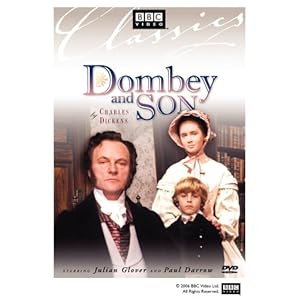
 Victorian authors can be difficult to read, but Dickens is one of the easiest to access. He wrote with pace. This was partly because many of his novels were written in short instalments so they could be serialised in the newspaper. Generally, Dickens wrote the way we are taught to:
Keep the reader tense and the character away from their goal
SPOILER: There are two weaknesses in this novel - born too early, died too soon.
Dombey sat in the corner of the darkened room in the great arm-chair by the bedside, and Son lay tucked up warm in a little basket bedstead, carefully disposed on a low settee immediately in front of the fire and close to it, as if his constitution were analogous to that of a muffin, and it was essential to toast him brown while he was very new.
This is a warm and loving introduction of the father and son. It is also a reminder that not all care has the affect we hope for. It takes a couple of hundred words of dying wife and pride before the most significant character – the one we really associate with – is introduced:
--To speak of; none worth mentioning. There had been a girl some six years before, and the child, who had stolen into the chamber unobserved, was now crouching timidly, in a corner whence she could see her mother's face. But what was a girl to Dombey and Son!
The strength of Dickens' work comes from his ability to see and describe people: their surface selves and the insecurities layered under that. It is strengthened again by seams of universal themes: poverty and charity; greed and generosity; power and powerless, revenge and sacrifice. Dickens' characters can teach life's lessons to his readers, with a lot less pain.
Ahead of the Dickens 2012, it is great to see Oprah adding two Dickens' novels to her reading list: A Tale of Two Cities and Great Expectations.
Do you have a favourite Dickens’ novel? Are you planning to give one a chance?

